Field Scoping and Design Research.
Sharper insight for better programme design - without heavier fieldwork.
Better development design starts with understanding local realities.
But that doesn’t mean months of ethnographic study.
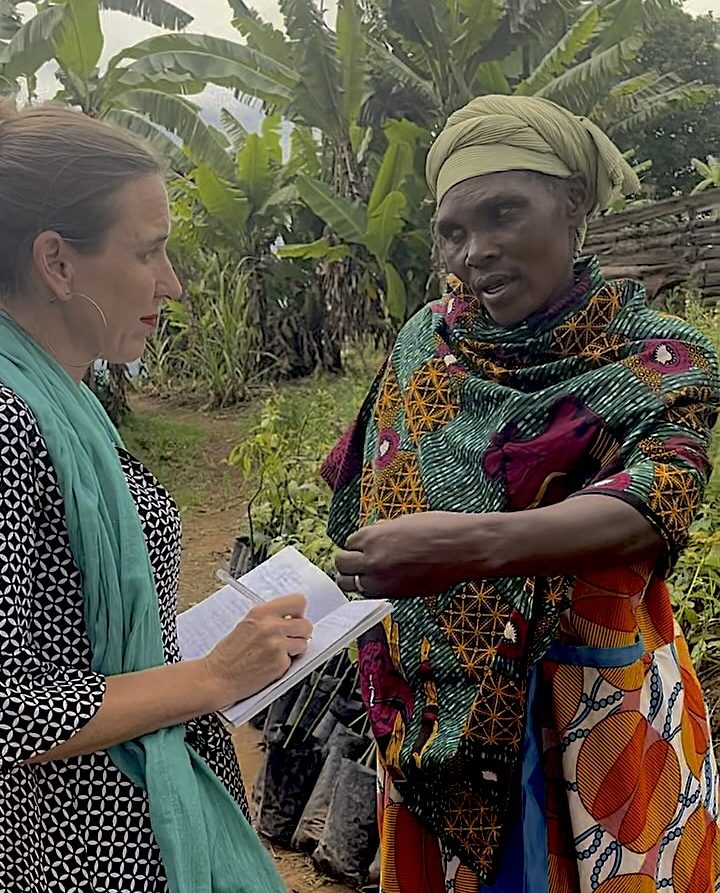
In most programmes, teams already hold rich insight about behaviours, motivations and delivery constraints - built up over thousands of hours of engagement with local communities.
Up-front investment in sharpening the intervention logic saves time overall.
Valuable fieldwork opportunities can then be spent on testing intervention logic and early prototypes rather than validating what is already broadly known.
BY DESIGN. offers a scoping approach that focuses fieldwork on design-critical aspects of your intervention logic - the specific assumptions that must hold true for your programme to work as intended.
Attributed to Abraham Lincoln
"If I had six hours to chop down a tree, I would spend the first four hours sharpening the axe"
In programme design, sharpening the axe means clarifying who you are designing for, what changes are desired
(by whom - desires might differ), and which assumptions really need testing.
How it works
1. Draft working User Personas and Micro Theory of Change
Before fieldwork begins, I support your team to articulate clearly what is already known about programme stakeholders and intended programme goals into a testable hypothesis that will be developed through the fieldwork.
User Personas
Teams often have good knowledge of what programme participants care about, but this has not been articulated into clear user personas that highlight what most matters to them.
Differences between participant groups are often overlooked (see Which tree growers do you mean?) as well as profiles of other stakeholders who help or hinder the changes you're aiming for.
User Personas are a powerful tool to ground user-centered design.
Micro Theory of Change
Specifically which mechanisms for change are expected? For example - how does the programme expect improved knowledge of end market prices to enable tree growers to negotiate higher prices for their woodlots? How exactly would that change occur?
2. Identify gaps to be addressed in fieldwork
Instead of broad exploratory research, fieldwork may focus on:
- filling gaps in understanding of user personas - these don't need to be 'complete' (they could never be) but if there is doubt about what really matters to users or why, this must be addressed in the fieldwork.
- identifying relevant existing practices that could be leveraged. For example, we know that micro entrepreneurs don't keep formal accounts, but what informal practices do they currently used that might be adapted to give them greater financial control? Trying to get micro entrepreneurs to shift from their current methods to formal accounting methods is often too big a shift, but it's not that they don't use any financial management tools, so how could these be developed further based on the way they think about their businesses?
- testing viability of specific interventions: Prototyping is an under-utilised design tool in development. If you already have interventions in mind, there are creative tools to test your interventions with participants to get early feedback on viability and save costly mistakes when you go to full implementation.
- co-design: see below - perhaps your fieldwork will involve engaging participants in problem identification and ideas for interventions, depending on the context.
3. "A Plan for the Plan"
Given what is known, what kind of process should be used to design the programme, and therefore what needs to be done in the fieldwork?
Is it already clear what interventions are needed or is there a need for fresh thinking?
Do you have enough knowledge in-house to use Design Thinking processes to generate intervention ideas, and then use the fieldwork to test prototype options?
Or do you want to engage community members in Design Thinking to generate the first round of options?
Why this is different
BY DESIGN. differs from conventional programme scoping in both content and process.
Where scoping often concentrates on identifying constraints and technical gaps, BY DESIGN. focuses on behavioural feasibility and the specific assumptions that must hold true for an intervention to work.
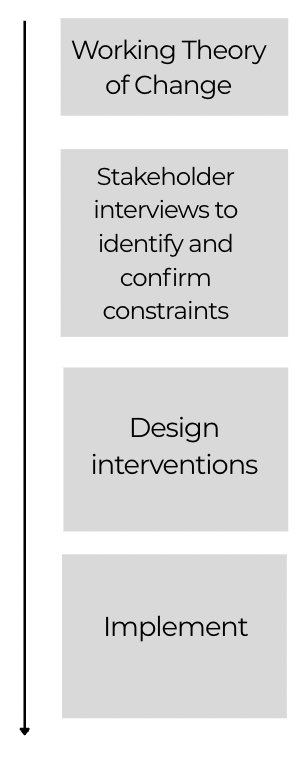
And where conventional approaches follow a linear scope–design–implement sequence, BY DESIGN. uses an iterative process that clarifies and prototypes intervention logic early, then uses focused fieldwork and co-design to test and refine it before full design and implementation. The level of co-design required will depend on the nature of the problem.
Conventional Track
Optimised for identifying structural, technical, and market constraints.
BY DESIGN. Track
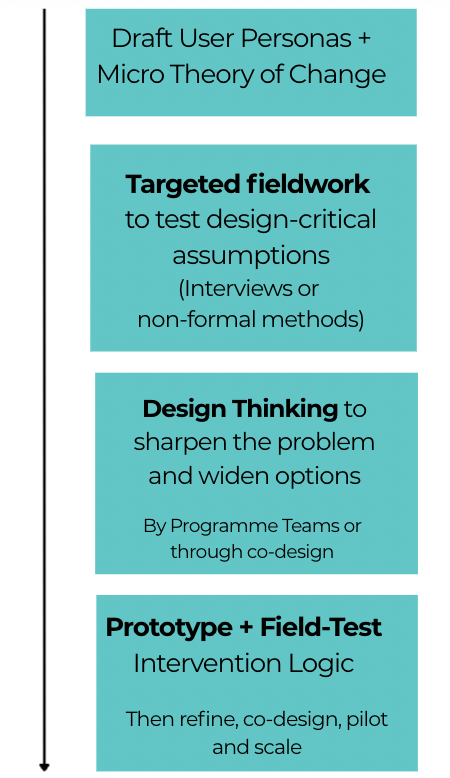
Optimised for testing behavioural feasibility and design-critical assumptions.
Who this is for
Organisations that
- already have significant programme reach and experience and are ready to try new design approaches to achieve greater impact
- recognise that conventional programme design methods can result in a gap between the model of "how change will happen" and ground realities
When it's especially useful
For designing new programmes that already have an emerging Theory of Change, or at the earliest stage of programme conception
When you have good general knowledge of the problem, but need specific additional insight from the field to refine your intervention plan
What if your next round of fieldwork didn’t just collect more data, but materially improved your programme design?
Most fieldwork validates what teams already broadly know.
BY DESIGN. scoping focuses instead on the questions that truly matter for design and delivery rather than broad descriptions of constraints.