Smallholder tree growers - which ones do you mean?
When you think “smallholder tree growers,” you probably imagine poor rural farmers with little capital and limited options.
In reality, this category contains radically different types of producers with very different motivations, constraints, and ambitions - and none of them are primarily focused on improving silviculture practices.
What programmes expect
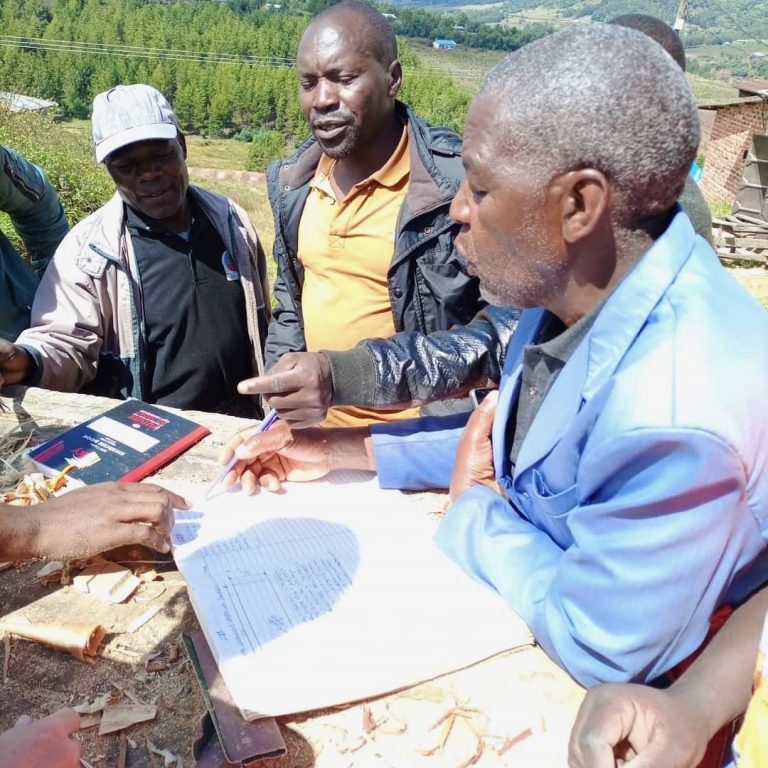
When we think about smallholder tree growers, we have a certain image in mind. The first type of tree grower I personally think of is subsistence farmers in rural areas of the Southern Highlands of Tanzania, with primary education or less, and struggling to cover the family's basic needs from insecure seasonal income. They are growing trees as a long term savings mechanism, alongside maize and beans. (And now, increasingly, avocados - which is easing the seasonal income pressures).
It seems obvious, but it's surprising how often the range of producers in the group "smallholder tree growers" is underestimated. Certainly, that profile represents one significant sub group of smallholder tree growers. But what about the others?
There are the big businessmen, with hundreds of acres of trees, also active in wood processing with equipment worth several thousands of dollars, and well connected to networks of traders. When they have extra cash they purchase more land for tree planting.
Their motivations and goals are clearly different, and would require different programme strategies.
What happens in practice
If you are promoting adoption of best silviculture practices, the struggling grandma is constrained by lack of money and time. To help her maintain her trees better, a programme would need to find ways to address the practical constraints. But advance cash payments aren't necessarily the answer, either. Given that her income cannot meet all the demands of her dependents, she is unlikely to use any extra cash on her trees, especially when the custom is to invest a bit in pruning in the early years, but mainly leave the trees until they mature while getting on with other livelihood activities.
The successful businessman is in a stronger position to grow better trees. He has good income from his wood processing activities and access to labour, so he could hire labourers to conduct pruning and thinning. But there is reportedly a psychological resistance to thinning - it feels like a loss of a tree that could later be sold, and there is only a limited market for thinnings. When he thinks about growing his tree growing activities, he talks of adding more acreage. Quality and maintenance is not on his radar, either due to market signals, lack of technical knowledge, or awareness. This profile is common in the Southern Highlands: commercially minded producers who already operate as small-scale timber entrepreneurs, not subsistence farmers.
In reality, programmes don't design specifically for any of these user personas but for a generic participant. It is assumed that providing technical training will lead to improved growing practices, though studies confirm that adoption is still low.
What's driving the gap?
This gap is not a failure of farmers. It is a failure of programme design.
Firstly, programmes are designed from a rational, high-level intervention logic: if tree growing practices are poor, then increasing technical knowledge should lead to adoption of better practices. However, this overlooks behavioural, financial, and contextual constraints that shape real-world decision-making.
Secondly, producers are treated as a homogenous group. Even where constraints are acknowledged (for example, inability to afford pruning), these typically apply to only one sub-group.
Where sub-groups are considered, this is often done using technical typologies - for example, size of woodlot, education, or income. But these categories fail to uncover the radically different motivations, mental models, and existing behaviours that determine whether change is even plausible.
Developing User Personas through Design Thinking brings that missing clarity. How do these different sub-groups currently manage their trees? What matters to them? What are they actually trying to achieve?
Only then can programmes define realistic outcomes for each group and design credible pathways for change.
Programme Implications
Developing User Personas brings profound design power to forestry programmes. It forces teams to move beyond generic categories like “smallholder tree growers” and confront the real diversity of incentives, constraints, and behaviours in their target populations.
Drafting personas is a simple, low-cost exercise that can be done using existing team knowledge and field experience. Yet it dramatically sharpens intervention logic by making explicit:
- Which behavioural shifts the programme is actually trying to achieve
- For which sub-groups those shifts are plausible
- What constraints must be addressed for change to occur
Crucially, this allows teams to test whether their Theory of Change is realistic at the activity level.
If a programme expects struggling subsistence farmers to adopt labour-intensive silviculture practices without addressing time, cash flow, and opportunity costs, failure is predictable.
If a programme expects commercially successful growers to prioritise tree quality over acreage expansion without changing market signals or mental models of value, adoption is equally unlikely.
User Personas make these hidden design flaws visible - early enough to fix them.